
What to Look For in a Professional Portrait Painter Before You Commit
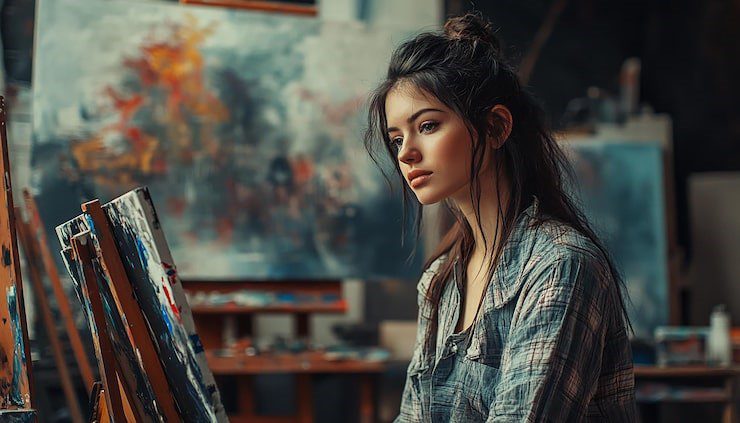
A professional portrait painter should be judged the same way any serious craftsperson is judged: by the process behind the work, not just the finished image posted online. Technique, training, and how a session is actually run all matter more than a polished portfolio alone can show.
In fifteen years of running this studio, families researching this decision have consistently run into a lot of marketing language and very little explanation of what actually separates real expertise from a confident website. That gap is worth closing before anyone commissions anything.
A genuine professional portrait painter does not rely on a single polished image to prove technique. The years of training behind it matter just as much, and that’s true whether that painter turns out to be me or someone else.
What This Blog Covers
- Why Credentials Matter More Than a Polished Portfolio
- What Training and Experience Actually Look Like in Practice
- What an Award Winning Portrait Artist Label Should Actually Mean
- The Technical Skills That Separate Real Craft From a Filter
- What to Expect From the Process Itself
- Questions Worth Asking Before You Commit
Why Credentials Matter More Than a Polished Portfolio
Anyone can curate ten beautiful images for a website. Fewer people can explain, clearly, what they actually studied, how long they have practiced, and where their technique came from.
My own background is in classical music and early childhood education, followed by fifteen years of hands on studio work, which produces a very different eye than a crash course in editing software. The patience required to keep a toddler calm for twenty minutes is not something a filter can substitute for.
Irving Stone once described Michelangelo spending years simply learning anatomy before he ever attempted a masterwork. Portrait painting asks for a smaller, quieter version of that same discipline, learned slowly and applied one sitting at a time, the same way I learned mine.
What Training and Experience Actually Look Like in Practice
Real experience tends to show up in specific, checkable places rather than vague claims. Speaking at more than forty camera clubs across New England and New York is not the same as simply owning a camera. Presenting at the NECCC Conventions and the PSA Convention in Charleston, South Carolina, meant my work got reviewed and discussed by other working professionals, not just admired by friends and family.
That kind of peer exposure sharpens technique in ways a solo studio practice never quite forces. Mistakes get noticed. Feedback gets absorbed. My own work improved because it was tested in front of people who knew exactly what to look for.
What an Award Winning Portrait Artist Label Should Actually Mean
The phrase ‘award winning portrait artist’ gets used loosely across the industry, often attached to studios with little to back it up. A more useful standard, to me, is peer recognition earned over time, not a badge purchased for a website footer.
Look for professionals invited to teach or speak at established organizations, whose work has been reviewed by other working artists and photographers, not simply praised in customer testimonials. That kind of standing is harder to fake and far more meaningful than a generic award graphic.
Fifteen years of continuous practice, an active conference presence, and a client base built almost entirely on referrals is the kind of standing I’d point to instead, whether or not a specific trophy sits on my shelf.
The Technical Skills That Separate Real Craft From a Filter
A handful of specific techniques separate genuine hand painted work from a heavily filtered photograph, and these are the ones I rely on in every piece.
- Visible, varied brushwork rather than a uniform digital texture applied evenly across the whole image.
- Organic oil paint technique, sometimes blended with digital tools like Corel Painter, rather than relying on software alone.
- Mixed media layering, where Giclee printing, canvas paper, and hand applied paint work together instead of substituting for each other.
- Mounting and sealing that protects the piece for decades, not just until the next humid summer.
What to Expect From the Process Itself
My process moves through a consistent rhythm: a consultation to discuss wardrobe and vision, a directed studio session, careful image selection, and a hand finishing period that simply cannot be rushed.
Fifteen years of repetition changes how that rhythm gets managed. A toddler who refuses to sit still, a teenager who hates every photo of themselves, a grandparent who insists they do not photograph well; all of it has come through my studio before, more than once.
Questions Worth Asking Before You Commit
- Where has this artist trained, spoken, or exhibited outside their own studio?
- How long have they been practicing this specific type of portrait work?
- What percentage of the finished piece is genuinely hand painted?
- Can previous clients or finished pieces be seen in person, not just in photographs online?
Frequently Asked Questions
What actually qualifies someone as a professional portrait painter?
Formal training, sustained practice over years, and recognition from peers within photography or painting organizations set a genuine professional portrait painter apart from someone who simply owns nice equipment. Consistent technique and process matter more than marketing claims.
Does an award winning portrait artist have to hold a specific award?
Not necessarily. Meaningful recognition often comes through invitations to teach, speak, or present at established organizations, which reflects peer respect more accurately than a single competition win.
How long does it typically take to become genuinely skilled at portrait painting?
Most professionals describe a decade or more of consistent practice before their technique fully matures, particularly when blending traditional painting with photography based methods.
What should I look for in a portfolio beyond finished images?
Ask about the process behind each piece, including how the reference photo was captured, what portion was hand painted, and how the piece was finished and mounted.
The Work Speaks Before the Label Does
The most technically accomplished portrait painters rarely rely on the word professional to make their case. My own process speaks for itself, visible in the brushwork, the materials, and the fifteen years spent refining both.
Choosing well means looking past a polished website and asking harder questions about training, technique, and standing within the field. The right answers reveal themselves in details, not in adjectives.