
Sarah Portrait Artist: The Name Behind Every Painted Portrait in This Studio
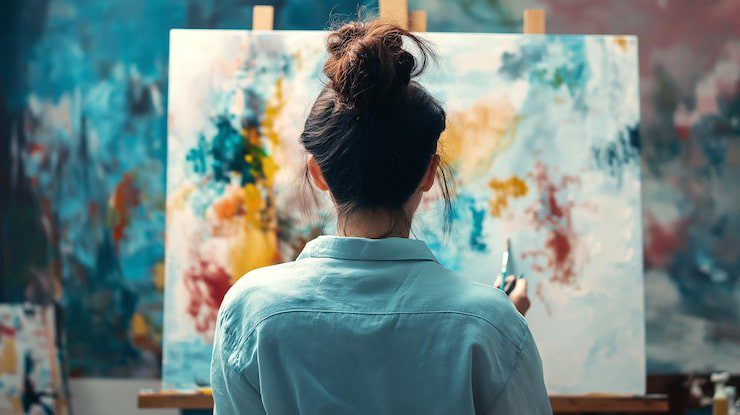
Search results labeled Sarah Portrait Artist all point back to one small studio on Main Street in North Andover. That name represents fifteen years of hand painted portraits, built one session at a time.
I’m Sarah Musumeci, and this is where that name actually comes from.
What’s Ahead
- Where the Name Sarah Portrait Artist Comes From
- What Makes a Professional Portrait Painter Different
- The Background Behind Every Session
- Two Finishes, One Process
- What Fifteen Years Actually Changes
- Questions Worth Asking Before You Commit
Where the Name Sarah Portrait Artist Comes From
Fifteen years ago, this studio started as a simple idea. Photography paired with hand painted finishing, built around real sessions rather than blank canvas guesses.
That idea eventually became the name Sarah Portrait Artist, now attached to a specific process rather than just a person. Clients searching that name usually want reassurance more than anything else.
They want to know the work behind the name is genuinely hers, not outsourced or automated. Every piece leaving this studio gets the same answer: yes, it is.
What Makes a Professional Portrait Painter Different
Not every professional portrait painter actually paints by hand. That distinction matters more than most people realize going in.
Some artists work entirely from a blank canvas, using a photo only as a loose guide. Others build every piece from a real, directed photography session, then apply oil paint by hand afterward, directly over a fine art print.
Neither approach is wrong. They simply serve very different expectations, and the difference is worth understanding before committing to either one.
The Background Behind Every Session
Classical music and early childhood education shaped how sessions get directed here, long before photography entered the picture. Patience matters just as much as technique, especially with subjects who cannot simply be told to hold still.
Speaking at more than forty camera clubs across New England and New York added another layer. Presentations at the NECCC and PSA conventions meant the process got tested in front of people who know exactly what to look for.
None of that happens in isolation. Feedback from other working professionals sharpens a craft in ways solo practice never quite manages.
Two Finishes, One Process
| Finish | What It Is | Best For |
| Regal | A richly detailed, refined enhancement of the studio photograph, polished enough to be mistaken for a painting. | Clients who want a gallery quality result close to the true photograph. |
| Venetian | Oil paint, gels, and visible brush strokes hand applied over a fine art print, closely simulating a commissioned oil painting. | Clients who want the full depth and texture of a genuinely painted heirloom. |
Both finishes get mounted on masonite board and sealed with lacquer for lasting protection. The decision comes down to how painterly the final piece should feel, not which option lasts longer.
What Fifteen Years Actually Changes
Fifteen years of repetition changes how a session gets managed, especially with subjects who refuse to cooperate or cannot sit still. Every version of that challenge has come through this studio before, more than once.
Toddlers who will not stop moving. Grandparents convinced they never photograph well. Pets that seem allergic to the camera entirely. Each one eventually becomes a finished piece, given enough patience and the right approach.
Materials matter just as much as experience, though they rarely get mentioned in the same conversation. Ordinary paper fades and wrinkles within a few years, regardless of how strong the original photograph was. Mounting on rigid board and sealing with lacquer solves that problem for good, holding color and texture for decades rather than years, long after a simple print would have needed replacing.
Questions Worth Asking Before You Commit
- Where has this artist trained, spoken, or exhibited outside their own studio?
- What percentage of the finished piece is hand painted?
- What is the piece mounted and sealed with?
- Can previous work be seen in person, not just online?
Frequently Asked Questions
Is Sarah Portrait Artist the same as Sarah Musumeci’s Fine Art Studio?
Yes. Sarah Portrait Artist is simply the name most clients search, while Sarah Musumeci’s Fine Art Studio is the formal studio name. Both point to the same person and the same process.
What actually qualifies someone as a professional portrait painter?
Formal training, sustained practice over years, and recognition from peers within photography or painting organizations. Consistent technique and process matter more than any single marketing claim.
Do you paint entirely from a blank canvas?
No. Every piece starts with a real, directed photography session first. Paint gets applied over that image by hand afterward.
How long does a finished piece take?
Hand painting takes real time, since brushwork gets applied individually. Expect several weeks between the session and a finished, painted piece.
Do you work with clients outside North Andover?
Yes. Clients travel from across the Merrimack Valley and beyond for a session. The studio itself sits on Main Street in North Andover.
The Name and the Work Are the Same Thing
Fifteen years of hand painted portraits built the reputation behind this name, one session at a time. That reputation only holds up because the process behind it stays consistent, piece after piece.
Sarah Portrait Artist was never meant to be a slogan. It became shorthand for a specific way of working, one that starts with a real photograph and ends with something genuinely painted by hand.
Choosing well means looking past a name and asking about the process underneath it. The right answers reveal themselves in details, not labels.