
Choosing a Child Portrait Artist: What Actually Separates a Keepsake From an Heirloom
Somewhere on every parent’s phone is a folder of hundreds of photos of their child that will never make it onto a wall. Too blurry. Too posed. Not quite them.
A child portrait artist exists to solve exactly that problem: catching one true likeness and turning it into a finished piece of art built to last for decades, not another file buried on a phone.
That comes down to a handful of decisions most families never think to ask about, how a session is actually run, how much of the finished piece is genuinely hand-worked, and what it’s physically built on once it leaves the studio. That’s exactly what’s ahead, straight from the process run here every week.
What This Table of Contents Covers
- What a Child Portrait Artist Actually Does, Session to Wall
- Painted-From-Photo vs. Blank-Canvas: Two Paths to the Same Heirloom
- Where Children’s Oil Painting Portraits Fit Into the Decision
- What Separates a Forgettable Portrait From a True Heirloom
- Questions Worth Asking Before You Commission Anyone
- What to Expect From Sitting to Finished Piece
What a Child Portrait Artist Actually Does, Session to Wall
Every session in the studio starts long before the camera comes out. Wardrobe, backdrop, and lighting get worked out first, along with a plan for keeping a child relaxed enough to show a real expression instead of a forced smile.
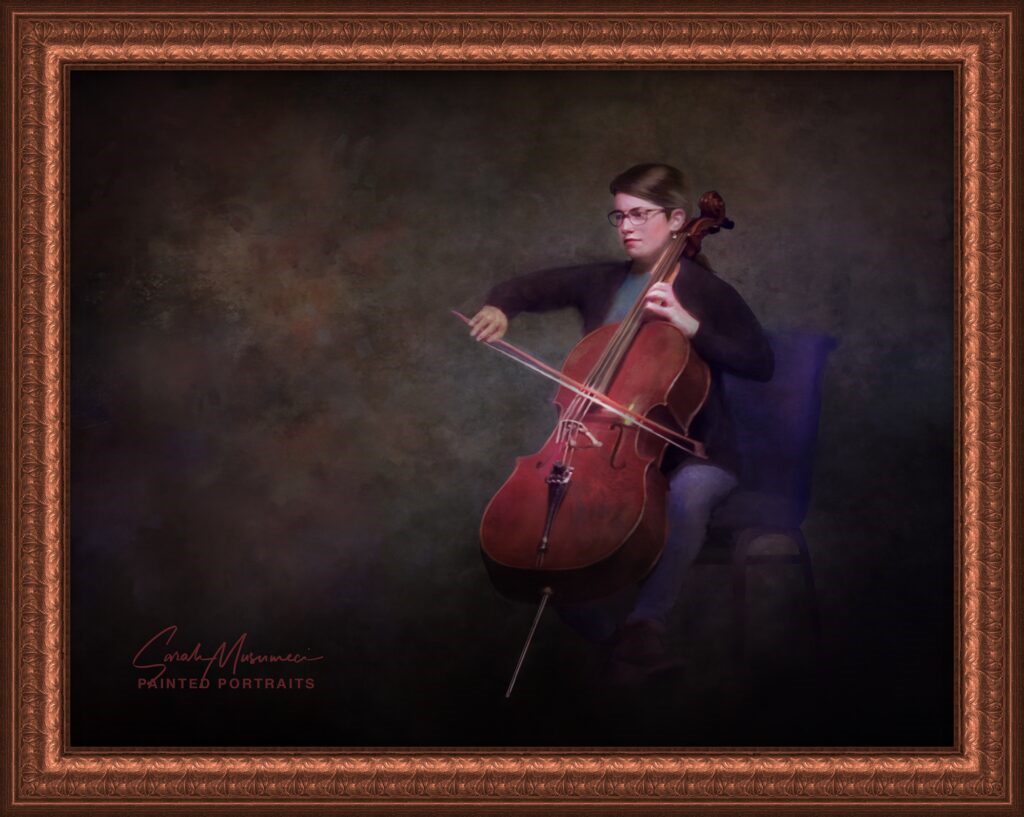
From there comes the part that actually defines the craft: refining color, correcting light, and, for painted work, applying visible brushwork, texture, and glazing by hand so the finished piece reads as art rather than a photograph.
Finishing is the last stage, and it’s the one people rarely think about. The surface the portrait is printed or mounted on, how it’s sealed, how it’s framed. Skip this step and even a beautifully composed portrait ages poorly.
Painted-From-Photo vs. Blank-Canvas: Two Paths to the Same Heirloom
Portrait artists generally fall into one of two camps, and it is worth understanding the trade-off before you commission anyone.
| Approach | How It Works | The Trade-Off |
| Traditional canvas painting | Artist paints from a blank canvas, using a photo only as reference. | Extraordinary when it works, but likeness can drift over the course of the painting. |
| Painted-from-photo (mixed media) | A fine art print of the actual session photo is hand-enhanced with oil paint, texture, and brushwork. | Likeness is locked in from the start, since the painting is built directly on the true image. |
Neither path is wrong. Families drawn to the unpredictability and prestige of a fully painted canvas tend to prefer the first option. Families who want certainty that the finished piece will actually look like their child, at that exact age, usually end up here instead.
Where Children’s Oil Painting Portraits Fit Into the Decision
This is where children’s oil painting portraits come into the picture. Every piece starts as a genuine photographic session, then gets built by hand with oil paint, brush strokes, gels, and texture applied directly onto a fine art canvas paper print.
The result sits between a photograph and a fully painted canvas. It carries the depth, texture, and one-of-a-kind quality people associate with painted art, while keeping the accuracy that only comes from starting with a real photograph of the child.
For a subject who cannot sit still for the hours a traditional painting requires, this approach solves a real problem. The child sits for a session here, not for a painting.
What Separates a Forgettable Portrait From a True Heirloom
Four details decide whether a portrait ends up on a wall for thirty years or in a drawer within three, and these are the ones worth watching closely.
- Materials: Look for portraits mounted on a rigid board, not just printed paper, so the piece cannot wrinkle or warp over time.
- Sealing: A lacquer or protective coating matters for longevity, especially in direct sunlight.
- Scale: The size of the finished piece should match where it will actually hang, not just the size that fits a standard frame.
- Session experience: A relaxed, playful child photographs differently than one who is stiff and rushed, and that difference shows up in the final piece every time.
Questions Worth Asking Before You Commission Anyone
- Is this portrait built from an original photo session, or from a photo I already have?
- What is actually hand-applied versus digitally filtered?
- What surface and mounting is the final piece finished on?
- How long has the studio been creating portraits of children specifically, versus general portraiture?
- Can I see finished pieces in person, not just on a screen?
What to Expect From Sitting to Finished Piece
The process runs through four stages: a consultation to talk through wardrobe and vision, the studio session itself, image selection together, and the hand-finishing period, which for genuinely painted work takes real time rather than an overnight turnaround.
Fifteen years of working specifically with children makes this move more smoothly, mostly because every version of a toddler who does not want to sit still has already shown up in the studio at least once.
Frequently Asked Questions
What is the difference between a photographed portrait and a painted portrait?
A photographed portrait is printed as captured. A painted portrait, including photo-based mixed media work, has oil paint, texture, and brushwork hand-applied afterward, giving it visible depth a straight photograph does not have.
How old should a child be for a portrait session?
Starting around age two and a half tends to work best, since children begin holding recognizable expressions and poses. That said, portraits at any age, including infancy, are common and cherished.
Do I need to bring my own reference photos?
Not for a studio session. Every sitting is directed specifically to capture the reference image the finished portrait is built from, which typically produces a stronger result than a casual family photo.
How long does a finished portrait take?
Photography alone can be turned around quickly. Hand-painted or mixed-media work takes considerably longer, since brushwork and texture are applied by hand rather than generated automatically.
The Signature Portrait
The happiest families here are rarely the ones who chased the lowest price or the fastest turnaround. They’re the ones who asked what the piece was made of, who did the painting, and whether the process actually fit their child.
That’s the real test, not how the portrait looks the day you pick it up, but how it looks twenty years from now. Ask about the materials. Ask who did the painting. Everything else is secondary.