
Children’s Portrait Paintings: Fine Art That Holds a Childhood
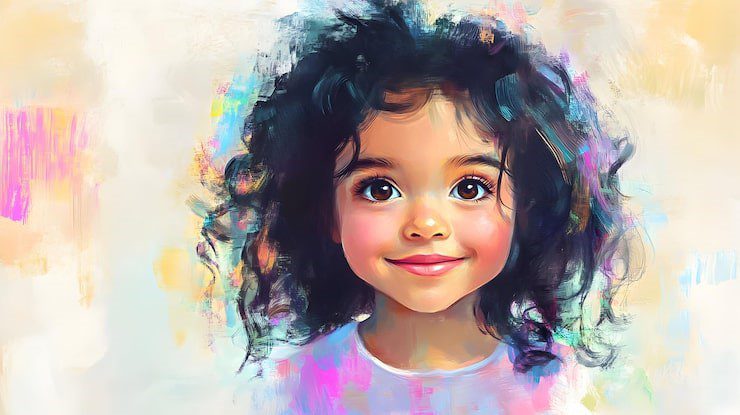
Children’s portrait paintings begin with a photograph of a child at ease and end as a fine art piece, finished by hand, that shows who that child is at this particular age. The photograph is the starting point rather than the product, and the finishing work is what gives a face its depth, warmth and presence.
Parents usually come to this after noticing how quickly a child changes. Here I explain how a session works, how the two finishes differ, and what to consider before you commit.
In This Guide
- Slowing Down Long Enough to Look
- How Children Forget the Camera Is There
- Regal or Venetian: Choosing the Finish
- What to Wear, and What to Leave at Home
- Questions Parents Ask Before Booking
- What a Grown Child Finds on the Wall
Slowing Down Long Enough to Look
Set last year’s school photograph beside this year’s and you will see what I mean. The front teeth have arrived, the cheeks have thinned, and the child in the earlier picture has quietly gone. Most families notice this a little late, usually when a toddler becomes a kindergartner seemingly overnight.
Stopping to look is what a portrait is for. Hung in a hallway or above a desk, it keeps one particular year in view, and years later it is often the one a grown child asks to take home.
How Children Forget the Camera Is There
My background in early childhood education shaped the way I photograph children more than any camera course did. Children will not hold a pose for a stranger, but will gladly show you a toy, tell you about the dog or giggle at a silly sound. So I keep sessions short, let them wander, and wait for the moment between the smiles, which is almost always the best frame.
That is why painting children’s portraits begins with patience rather than technique. The expression I am after is the one a parent recognizes at once, the half-smile a child wears while thinking about something else, and everything that follows is built around it.
Regal or Venetian: Choosing the Finish
Every portrait is finished one of two ways. The Regal finish is a richly detailed photographic enhancement, polished and true to life. The Venetian finish is more painterly, with oil paint and gels applied by hand over a Giclée print on fine art canvas paper, leaving brush strokes that catch the light.
| Consideration | Regal | Venetian |
| Look | Clean and true to life | Textured and painterly |
| Method | Photographic enhancement | Oil paint and gels, hand applied |
| Cost | Standard | Additional charge |
Both finishes suit children’s portrait paintings, and both are mounted on masonite board and sealed with lacquer, so either is built to hang for decades. Families tend to choose by temperament, and neither is the wrong answer.
What to Wear, and What to Leave at Home
Solid colors in soft tones photograph and age best, while cartoon characters, slogans and busy stripes will date a portrait. Let the child choose between two outfits you both like, since a child who feels like themselves looks like themselves. Favorite things are welcome too, whether that is a stuffed rabbit or a well-worn book.
Questions Parents Ask Before Booking
How long does a child’s portrait take?
Most portraits take several weeks from the session to the finished piece. The photograph is only the beginning, and the finishing is done by hand, with a Venetian piece needing extra time for the paint to dry. Rushing would show in the result.
Does my child have to sit still?
Not at all. Sessions are short and playful, and the best expressions usually appear when a child is distracted by a story or a game. Stillness is never the goal, since a relaxed, natural face makes a far better portrait than a posed one.
What age is best for a child’s portrait?
Any age has its charm. Toddlers show round, unguarded features, while school-age children reveal emerging personalities. Many families return every few years, and a set of children’s painted portraits on one wall becomes a record that no album can match.
How do I choose an artist for my child’s portrait?
Look at finished portraits of children in particular, since likeness and expression are hard to capture. Ask about the process, the finishes and the timeline, and notice whether the faces feel alive rather than stiff. Portfolios tell you more than any description.
What a Grown Child Finds on the Wall
Children’s portraits are quietly about time. Parents stand before the finished piece, notice the exact tilt of a head or the particular green of the eyes, and see a child they meet every day as if for the first time. Years on, the same portrait will hang in the same place while the child does not stay the same, and one day a grown son or daughter will stand in front of it and recognize, with a small start, who they used to be. That is what I hope every portrait leaving my studio does.